
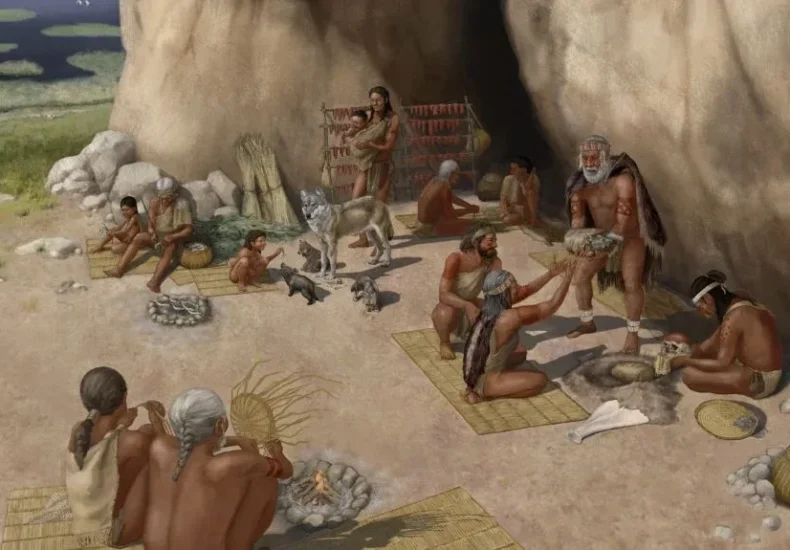
Ancient DNA Reveals 16,000-Year-Old Dogs in Anatolia, Rewriting the Origins of Domestication
A quiet stretch of central Anatolia is now offering one of the clearest answers yet to a long-standing question: when did wolves become dogs?
New genetic evidence from the Pınarbaşı site in Türkiye shows that early dogs were already living alongside humans around 16,000 years ago—far earlier than previously confirmed. The discovery places Anatolia at the center of one of the most consequential turning points in human history: the domestication of the first animal companion.
The research, led by scientists at the University of Oxford and involving 17 international institutions, was published in the journal Nature.
A discovery rooted in Anatolia
For years, the earliest stages of dog domestication remained frustratingly elusive. Bones alone rarely provided clear answers; early dogs and wolves were often nearly indistinguishable.
📣 Our WhatsApp channel is now LIVE! Stay up-to-date with the latest news and updates, just click here to follow us on WhatsApp and never miss a thing!!
At Pınarbaşı, however, that uncertainty begins to fade.
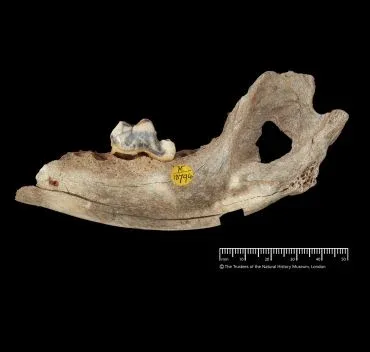
Using full genome analysis, researchers examined canid remains dated to approximately 15,800 years ago. The results confirmed that these animals were not wolves, but already part of a distinct dog population.
This finding pushes the confirmed genetic record of dogs back by roughly 5,000 years—and does so from a site in central Anatolia, a region already known as a crossroads of prehistoric human movement.
Before farming, before cities—there were dogs
The timing of the discovery is as significant as the location.
These dogs lived in a world without agriculture, settlements, or domesticated crops. Human communities were still hunter-gatherers, navigating the shifting landscapes of the last Ice Age.
And yet, even in this early period, dogs had already emerged as a separate species—suggesting that domestication began long before the transformations associated with farming societies.
Genetic data further indicates that these early dogs were part of a population that expanded rapidly across western Eurasia between roughly 18,500 and 14,000 years ago.
A shared presence across distant landscapes
The Anatolian evidence does not stand alone.
Comparable genetic signatures have been identified in remains from Gough’s Cave in the United Kingdom and several sites in southeastern Europe. Despite distances of thousands of kilometers, these early dogs appear closely related.
Such consistency points to a striking conclusion: once dogs emerged, they spread quickly alongside human groups moving across the continent.
Their presence across multiple cultural traditions—including Epigravettian and Magdalenian communities—suggests that dogs were not confined to a single population, but moved through broader networks of interaction.
More than survival: signs of a relationship
At Pınarbaşı, the story extends beyond genetics.
Isotopic analysis indicates that humans may have fed dogs fish, a detail that hints at intentional care rather than opportunistic coexistence. In addition, some of the remains appear to have been deliberately buried.
These traces suggest a relationship that may already have carried social or symbolic meaning—long before written history or settled life.
Similar patterns observed at other European sites reinforce this interpretation, pointing toward a deeper, more complex bond between humans and dogs during the Late Palaeolithic.
Anatolia at the beginning of a long partnership
Taken together, the findings reposition Anatolia within the broader narrative of domestication.
Rather than being a peripheral region, central Türkiye now appears to have been part of the early landscape in which dogs first emerged and spread.
The implications extend far beyond the origins of a single species. They touch on mobility, interaction, and adaptation—key dynamics that shaped human societies at the end of the Ice Age.
What began as a shift in the relationship between humans and wolves would go on to transform both species.
And in places like Pınarbaşı, that story is finally becoming visible.
- A 1700-year-old statue of Pan unearthed during the excavations at Polyeuktos in İstanbul
- The granary was found in the ancient city of Sebaste, founded by the first Roman emperor Augustus
- Donalar Kale Kapı Rock Tomb or Donalar Rock Tomb
- Theater emerges as works continue in ancient city of Perinthos
- Urartian King Argishti’s bronze shield revealed the name of an unknown country

- The religious center of Lycia, the ancient city of Letoon
- Who were the Luwians?

- A new study brings a fresh perspective on the Anatolian origin of the Indo-European languages

- Perhaps the oldest thermal treatment center in the world, which has been in continuous use for 2000 years -Basilica Therma Roman Bath or King’s Daughter-

- The largest synagogue of the ancient world, located in the ancient city of Sardis, is being restored
Leave a Reply