
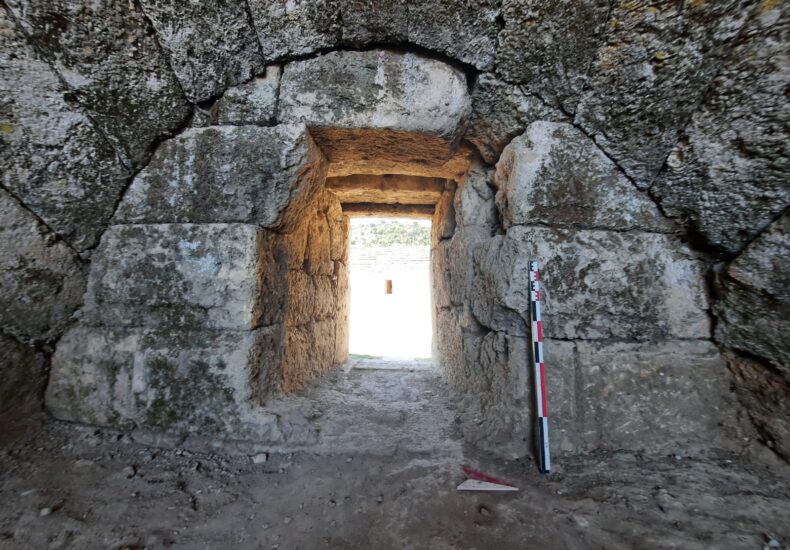
‘Death Gates’ Unearthed in Perge: Ancient Stadium Transformed into Execution Arena
Archaeologists working at Perge Ancient City have unearthed a striking architectural feature described as “death gates,” revealing that the city’s monumental stadium was later transformed into an arena used for executions, animal hunts, and staged spectacles during the Late Roman period. The discovery suggests that the structure was not merely reused, but deliberately redesigned to accommodate controlled forms of public violence, reshaping its role within the urban landscape of Roman Anatolia.
Rather than a simple adaptation, the evidence points to a broader transformation in how public architecture functioned. In Roman Anatolia, spaces once associated with civic life and athletic competition could be reconfigured into arenas where spectacle, authority, and controlled violence were publicly enacted.
Architectural Transformation of the Perge Stadium
Excavations led by Prof. Dr. Sedef Çokay Kepçe of Istanbul University reveal that the stadium underwent significant structural modifications. Among the most notable are elevated platforms, enclosed compartments interpreted as animal holding areas, and carefully designed entry passages opening into the arena.
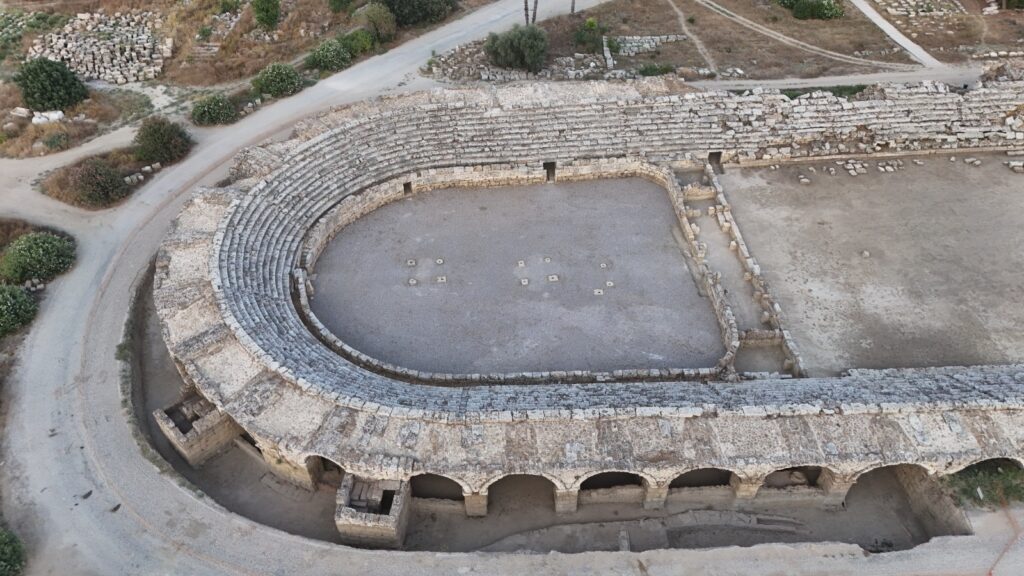
These elements point to a space that was engineered for performance. The organization of movement, visibility, and timing suggests that events were systematically staged, aligning the structure more closely with the function of an amphitheater than a traditional stadium.
📣 Our WhatsApp channel is now LIVE! Stay up-to-date with the latest news and updates, just click here to follow us on WhatsApp and never miss a thing!!
The Role of the “Death Gates”
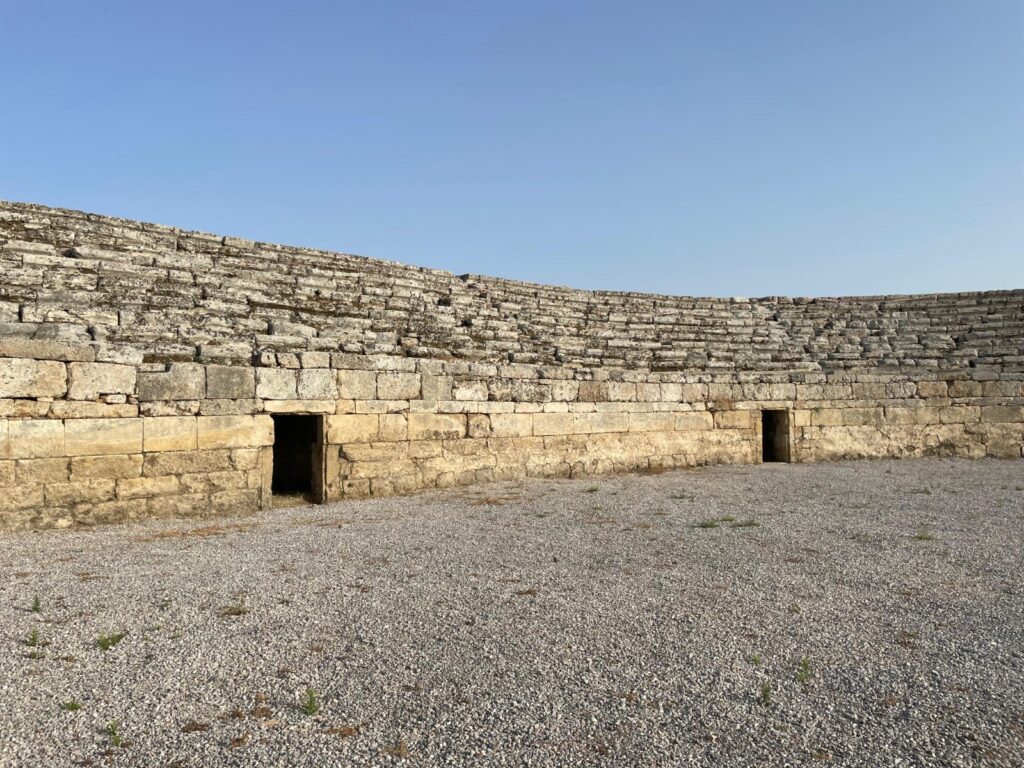
The most distinctive feature identified so far is the system of five adjacent gate openings connected directly to the arena floor. These so-called “death gates” are interpreted as mechanisms used to release animals in a controlled sequence, allowing organizers to manage the progression of spectacles.
This arrangement reveals a high level of planning. The arena was not simply a venue—it functioned as a regulated environment where spectacle was carefully orchestrated. The ability to control animal entry would have shaped both the pacing and the dramatic impact of events.
Evidence for Execution Practices
The architectural configuration also raises the possibility that the arena hosted damnatio ad bestias, a form of execution in which condemned individuals were exposed to wild animals.
Although direct textual confirmation has not yet been identified, multiple lines of evidence support this interpretation. Faunal remains, spatial organization, and parallels with known Roman arenas suggest that the stadium’s later phase included public punishment presented as spectacle.
Researchers further propose that the arena may have accommodated performances involving the pons, a structural feature associated with certain gladiatorial displays. If confirmed, this would indicate a diverse and programmatic use of the space.
Arena Culture in Roman Anatolia
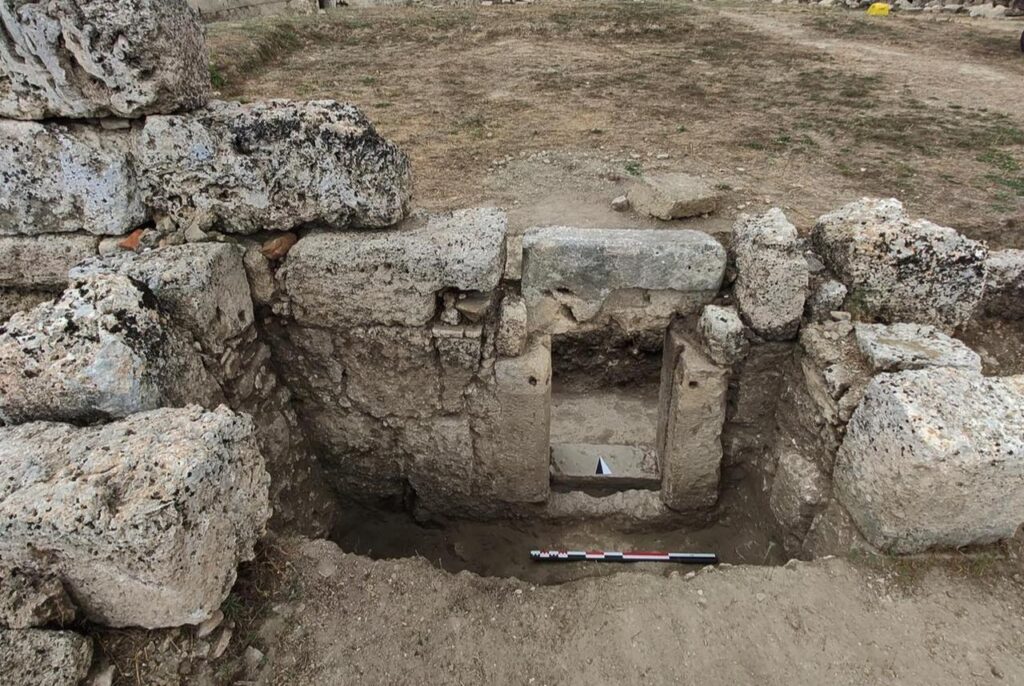
The transformation observed at Perge reflects a broader regional pattern. In contrast to the western provinces of the Roman Empire, where purpose-built amphitheaters are more common, cities in Anatolia often adapted existing monumental structures.
Perge offers a particularly clear case of this process. The stadium was not abandoned but reinterpreted and repurposed, demonstrating how Roman spectacle culture was integrated into local urban environments.
Restoration of the Kestros Fountain
Alongside these findings, restoration work at the site highlights a different aspect of Perge’s past. The Kestros Fountain, dating to the reign of Hadrian, has recently been reactivated, allowing water to flow again after approximately 1,800 years.
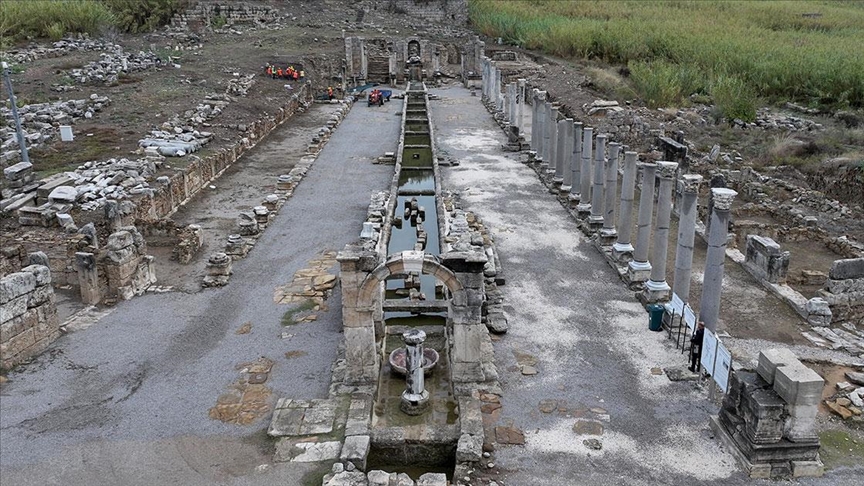
This achievement underscores the technical sophistication of Roman hydraulic engineering and reflects ongoing efforts to preserve the city’s architectural heritage. It also creates a meaningful contrast within the site—between spaces designed for sustaining life and those adapted for staged violence.
Reinterpreting Urban Space in Perge
Perge, located in Antalya’s Aksu district, has long been recognized for its monumental layout and well-preserved structures. The new findings from the stadium add a crucial dimension to this understanding.
They demonstrate that urban space in the Roman world was not fixed in function, but evolved over time. Structures originally associated with civic identity and athletic life could be transformed to serve entirely different purposes, including those centered on authority, spectacle, and control.
In this sense, the Perge stadium stands as a compelling example of how architecture reflects changing social realities—offering new insight into the dynamics of Roman urban life in Anatolia.
- A 1700-year-old statue of Pan unearthed during the excavations at Polyeuktos in İstanbul
- The granary was found in the ancient city of Sebaste, founded by the first Roman emperor Augustus
- Donalar Kale Kapı Rock Tomb or Donalar Rock Tomb
- Theater emerges as works continue in ancient city of Perinthos
- Urartian King Argishti’s bronze shield revealed the name of an unknown country
- The religious center of Lycia, the ancient city of Letoon
- Who were the Luwians?
- A new study brings a fresh perspective on the Anatolian origin of the Indo-European languages

- Perhaps the oldest thermal treatment center in the world, which has been in continuous use for 2000 years -Basilica Therma Roman Bath or King’s Daughter-
- The largest synagogue of the ancient world, located in the ancient city of Sardis, is being restored
Leave a Reply