Tuesday, December 16 2025
A Roman Elite’s Marble Bathtub Reused as a Fountain Trough Discovered at Ephesus

Aegean . Anatolian News

A Roman Elite’s Marble Bathtub Reused as a Fountain Trough Discovered at Ephesus

Written by

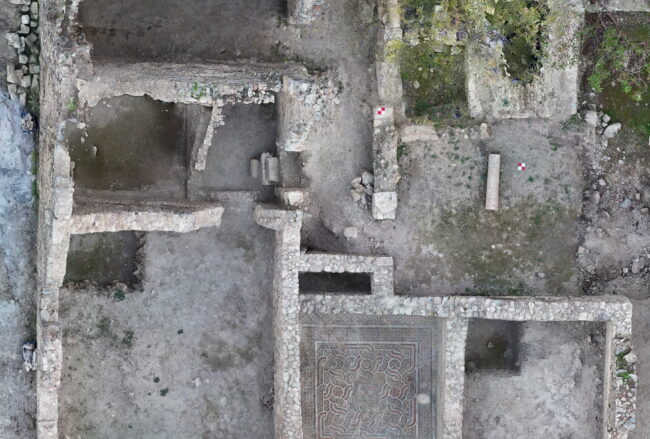
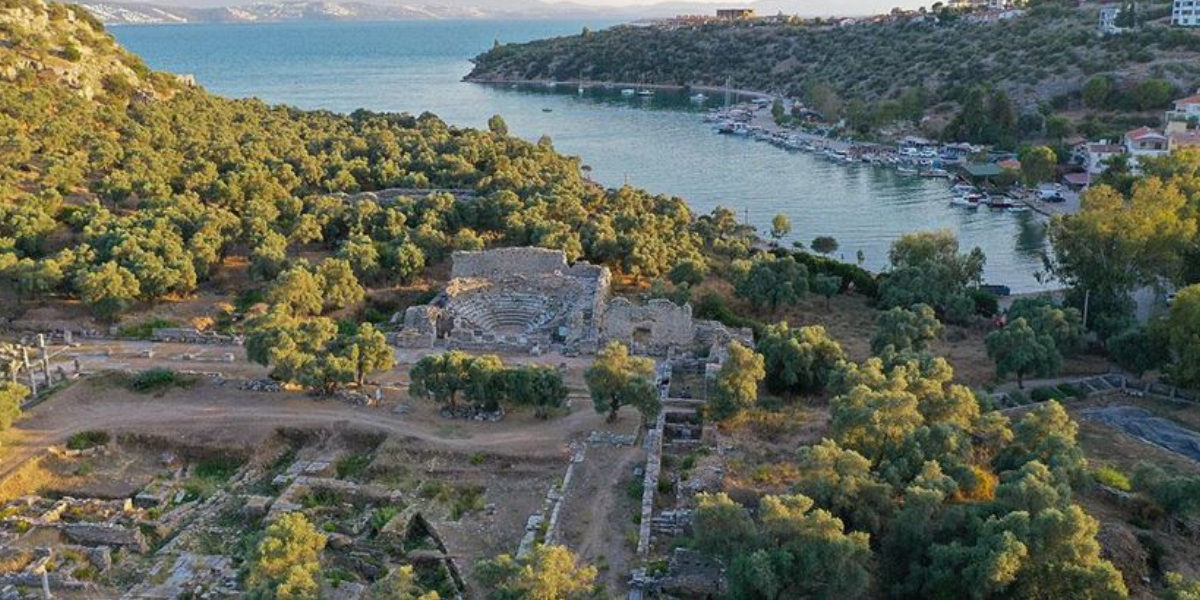
At Ephesus, one of the most intensively studied cities of the ancient Mediterranean, archaeologists continue to encounter the unexpected consequences of urban life stretching across centuries. During the 2025 excavation season at the UNESCO World Heritage Site, a finely carved Roman marble bathtub—once associated with elite domestic life—has been uncovered along the city’s Stadium Street,

Roman sarcophagus found for the first time in Diyarbakır

Roman sarcophagus found for the first time in Diyarbakır

A sarcophagus thought to be from the Roman period was found during the restoration works of the damaged points of the 5,000-year-old Diyarbakır city walls, a UNESCO World Cultural Heritage Site. The sarcophagus found in Diyarbakır attracted attention because it was found for the first time. While the restoration work on the 4th stage of

Circular shaped Iron Age Gallic village found in France using LIDAR technology

Circular shaped Iron Age Gallic village found in France using LIDAR technology

At Cap d’Erquy in the Côtes d’Armor region of France, satellite imaging technology has uncovered the remains of a circular village from the Iron Age. In Cap d’Erquy, in the Côtes d’Armor region of France, the remains of a circular-shaped village from the Iron Age have been uncovered using satellite imaging technology. The village consists

Tide reveals a Bronze Age fort on the Irish island of Clew Bay

Tide reveals a Bronze Age fort on the Irish island of Clew Bay

A sunken Bronze Age fort has been discovered on the island of Clew Bay off the coast of North Mayo, Ireland. The discovery was made at low tide in Clew Bay. Archaeologist Michael Gibbons said initial research suggested that the island – Collanmore – was a fort dating from the Late Bronze Age. The castle

The 1000-year-old balbales in Çivril bear the traces of Turkish civilization and belief system

The 1000-year-old balbals in Çivril bear the traces of Turkish civilization and belief system

The balbals in Özdemirci Cemetery in Çivril district of Denizli continue to attract the attention of history buffs and archaeologists. These balbals, which are estimated to have a history of about 1000 years, bear the traces of Turkish civilization and belief system. Balbals are stone monuments erected in the cemeteries of Turkic communities migrating from

Hittites

Aygül Süel “We are making big mistakes about the Hittites”

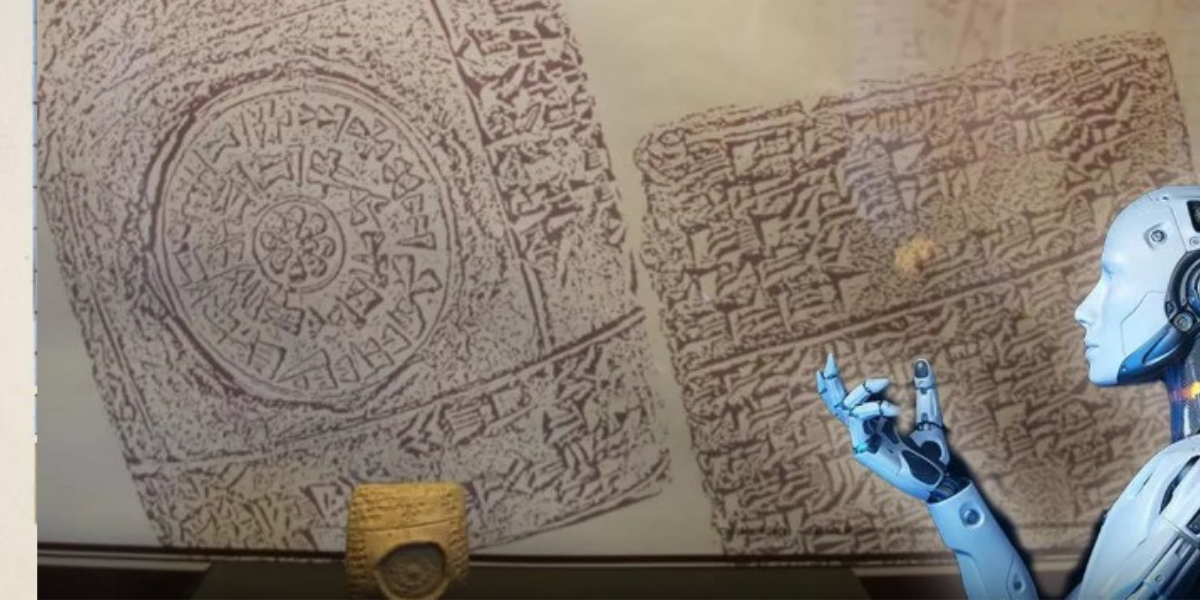
Prof. Dr. Aygül Süel, Head of the Department of Archaeology, Faculty of Arts and Sciences, Hitit University and the director of the excavation of the city of Sapinuwa , said in an online session she attended in recent years that we are making great mistakes for the Hittites. Stating that some of the information that has

The oldest copper axe discovered in Poland

The oldest copper axe discovered in Poland

A copper axe identified with the Trypillia culture from the 4th to 3rd millennium BC has been discovered in Horodło municipality in Hrubieszów region. An axe discovered in the Hrubieszów region and identified with the Trypillia culture is most likely the oldest find of copper products in Poland, informed the Lublin Provincial Conservator of Monuments.

Sarcophagus found during electricity cable renewal work in Hatay

Sarcophagus found during electricity cable renewal work in Hatay

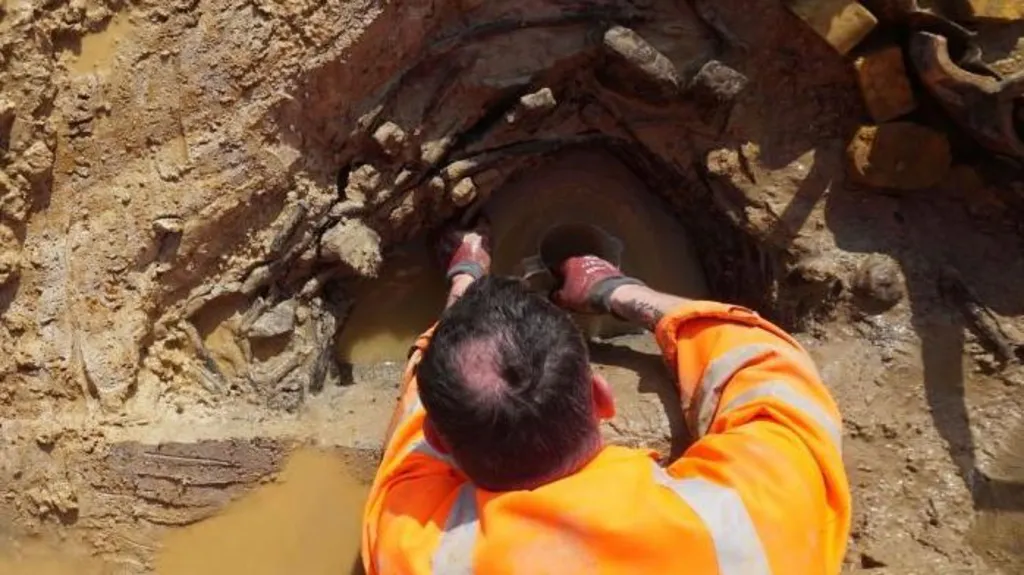
A sarcophagus was found in Hatay, which was destroyed by a major earthquake in February last year, during the renewal work of the electricity cables started by the energy company. Thanks to the meticulous work of the workers, the sarcophagus was removed without damage and taken under protection by the Hatay Museum archaeologists. Mythological objects

Archaeology students in Greece unearth statue head of god Apollo

Archaeology students in Greece uncover the head of a statue of the god Apollo

A group of archaeology students working at the archaeological site of Philippi in northern Greece have unearthed the marble head of a statue believed to be of the god Apollo. The Greek Ministry of Culture announced the discovery in a statement on Thursday. Archaeologists say the statue head can be dated to the 2nd or

British archaeologists find Iranian glass beads in 'Britain's Pompeii'

British archaeologists find Iranian glass beads in ‘Britain’s Pompeii’

British archaeologists have discovered Iranian glass beads in a Bronze Age settlement dubbed ‘Britain’s Pompeii’. The so-called Pompeii of Britain is a Bronze Age settlement known as Must Farm in Cambridgeshire, England. Dating from 1200-800 BC, the settlement was abruptly abandoned after a fire and thus very well preserved. Excavations in 2016 unearthed circular wooden

A 4,500-year-old funerary monument discovered in East Yorkshire

A 4,500-year-old funerary monument discovered in East Yorkshire

A 4500-year-old burial monument, along with a burnt mound and parts of a Roman road, have been discovered in East Yorkshire during fieldwork ahead of the construction of a sewer. The discovery was made by archaeologists from Ecus Archaeology for Yorkshire Water. Although the analysis part of the research has not yet begun, it seems

1 83 84 85 86 87 109