
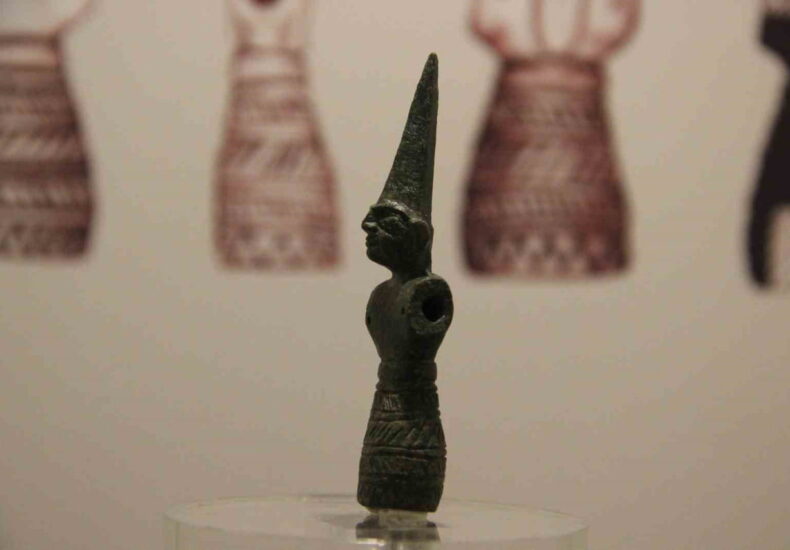
3,500-Year-Old Hittite Storm God Figurine Unearthed in Türkiye Goes on Display for the First Time
A remarkably small yet technologically advanced Hittite storm god figurine, dating back around 3,500 years, has gone on public display for the first time in central Türkiye. Measuring just 7.65 centimeters, the object is already drawing attention for what specialists describe as an unusual combination of miniature scale and complex engineering.
Discovered by chance in the Çorum region—at the heart of ancient Hittite territory—the figurine offers a rare and highly tangible link to one of Anatolia’s most powerful Bronze Age civilizations.
A Chance Find in Hittite Heartland
The artifact was found by a local resident in the Alaca district, an area closely associated with the ancient capital of Hattusa. Although early reports referenced different nearby villages, all accounts confirm that the discovery occurred within this historically dense landscape.
Crucially, the finder reported the object to authorities, allowing it to enter the Boğazköy Museum collection through official channels. After conservation and documentation, the figurine was unveiled to the public during Türkiye’s Tourism Week—marking its first appearance outside academic contexts.
📣 Our WhatsApp channel is now LIVE! Stay up-to-date with the latest news and updates, just click here to follow us on WhatsApp and never miss a thing!!
Advanced Engineering at a Tiny Scale
At first glance, the figurine’s size might suggest simplicity. The opposite is true.
The object was crafted from arsenical copper, a material widely used in Bronze Age metallurgy. What sets it apart is its construction method. Rather than being cast as a single piece, the figure was assembled using a riveted limb technique—its arms and legs produced separately and later attached to the body.
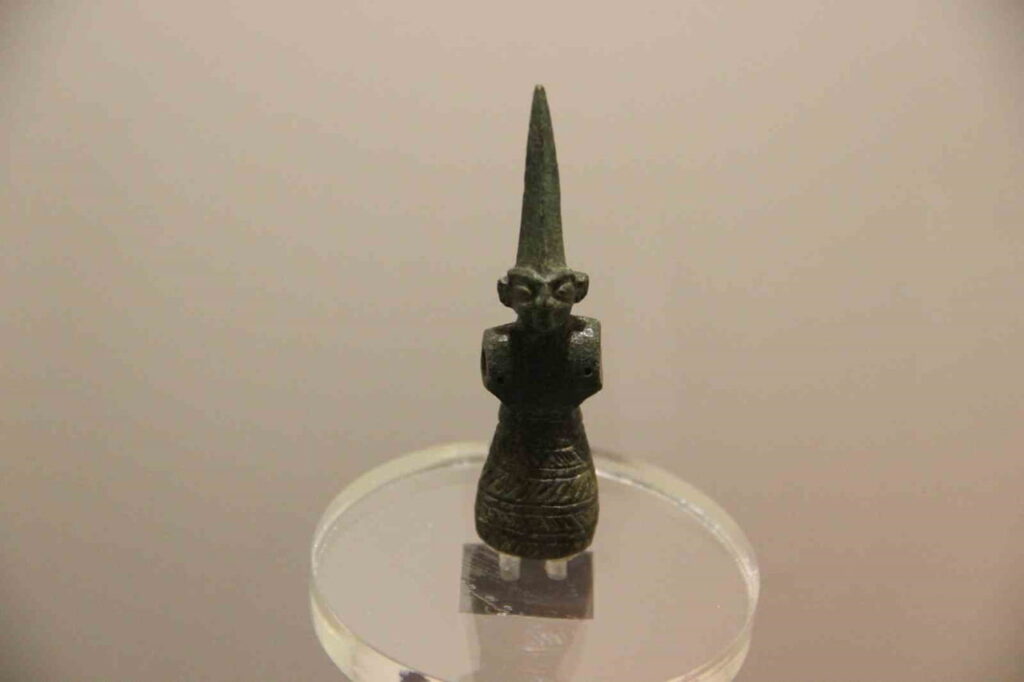
Small but telling details, including pinholes and socket-like joints, reveal a controlled and deliberate production process. This level of technical sophistication is rarely documented in objects of this size, making the figurine one of the smallest known examples of modular metalworking in Hittite art.
In practical terms, it reflects not just craftsmanship, but a deep understanding of material behavior and structural design.
The Storm God and Hittite Belief
Beyond its technical qualities, the figurine carries strong symbolic meaning.
In Hittite religion, the storm god stood at the center of the pantheon—a divine force associated with rain, fertility, and cosmic authority. Known across Anatolia under names such as Tarhunza and Teshub, this deity was essential to both agricultural life and royal ideology.
Representations like this were more than decorative objects. They likely functioned within ritual contexts, embodying divine presence in both public and private settings.
The figurine’s human-like form reflects this role, translating an abstract force of nature into a tangible, portable image.
From Research Circles to Public View
Before reaching museum display, the artifact had already attracted scholarly attention. It was previously presented in an international Hittite exhibition and discussed at academic meetings in Türkiye.
Its public unveiling signals a broader shift—bringing specialized archaeological material into wider visibility. For visitors, it offers a rare opportunity to encounter an object that until recently existed only within research environments.
A Small Object with Outsized Importance
Hittite metal figurines are rare. Examples combining miniature scale, complex assembly, and clear religious identity are rarer still.
What makes this piece particularly striking is how much it compresses into such a small form. It is at once a product of technological innovation, a reflection of religious belief, and a carefully crafted artistic object.
Now exhibited in its regional context, near Hattusa, the figurine does more than represent a storm god. It reveals a world where engineering precision and spiritual meaning were closely intertwined—and where even the smallest objects could carry the weight of an entire civilization.
- A 1700-year-old statue of Pan unearthed during the excavations at Polyeuktos in İstanbul
- The granary was found in the ancient city of Sebaste, founded by the first Roman emperor Augustus
- Donalar Kale Kapı Rock Tomb or Donalar Rock Tomb
- Theater emerges as works continue in ancient city of Perinthos
- Urartian King Argishti’s bronze shield revealed the name of an unknown country
- The religious center of Lycia, the ancient city of Letoon
- Who were the Luwians?
- A new study brings a fresh perspective on the Anatolian origin of the Indo-European languages

- Perhaps the oldest thermal treatment center in the world, which has been in continuous use for 2000 years -Basilica Therma Roman Bath or King’s Daughter-
- The largest synagogue of the ancient world, located in the ancient city of Sardis, is being restored
Leave a Reply