
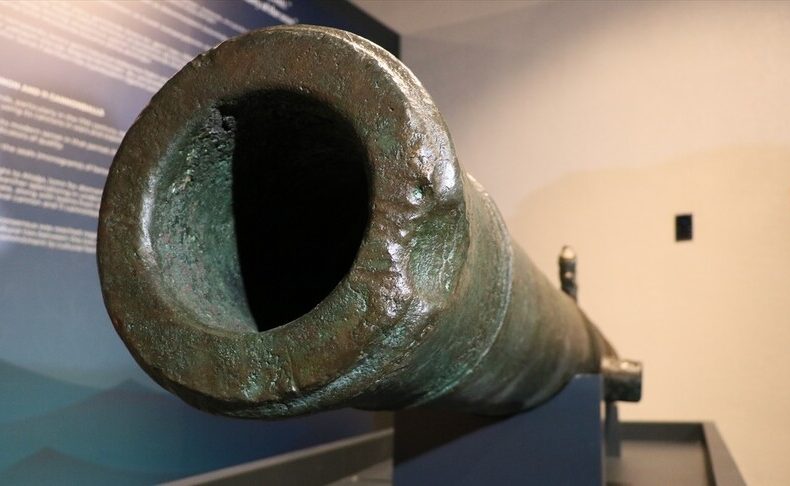
17th-Century Dutch Bronze Ship Cannon Discovered During Shipbreaking in İzmir Goes on Display
A routine shipbreaking operation in western Türkiye has led to an unexpected historical discovery: a 17th-century Dutch bronze ship cannon and its ammunition, found hidden inside a vessel dismantled in İzmir. The artifacts, uncovered by chance, are now on public display for the first time.
Hidden Inside a Modern Vessel
The discovery was made in 2025, when a ship brought to İzmir for dismantling was being stripped down. During the process, workers identified an unusual object inside the vessel’s restaurant section. What initially appeared to be a decorative or obsolete metal piece soon drew attention for its unusual form and material.
Museum specialists were alerted and quickly secured the object, along with 11 cannonballs found nearby. Preliminary examinations confirmed that the items were not modern reproductions but authentic historical artifacts.
A Cannon from the Early Modern Maritime World
Further analysis revealed that the cannon was of Dutch origin, dating to the first half of the 17th century—a period marked by intense naval competition and global trade expansion.
📣 Our WhatsApp channel is now LIVE! Stay up-to-date with the latest news and updates, just click here to follow us on WhatsApp and never miss a thing!!
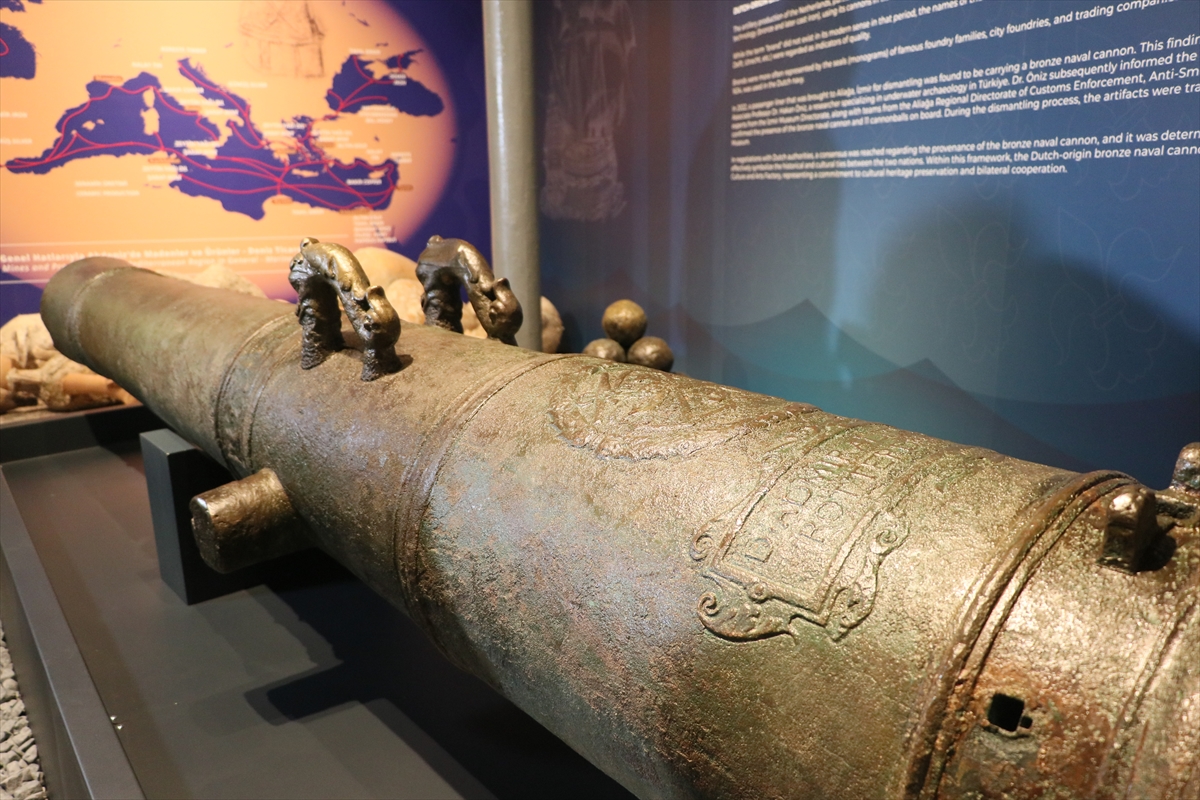
Bronze cannons like this were highly valued in early modern Europe. Unlike iron, bronze resisted corrosion and could withstand repeated firing, making it a preferred material for naval artillery. Such weapons played a critical role not only in warfare but also in protecting merchant fleets and asserting maritime power across key trade routes.
The İzmir find offers a rare, tangible link to that world—one shaped by seafaring empires, commercial rivalries, and technological innovation.
Diplomatic Coordination with the Netherlands
Once the cannon’s origin was identified, Turkish authorities initiated contact with officials in the Netherlands. Rather than requesting repatriation, Dutch representatives supported the idea that the artifacts remain in Türkiye for exhibition.
According to Birol İnceciköz, Director General of Cultural Heritage and Museums, the decision reflects a shared commitment to cultural cooperation. He noted that displaying the artifacts in İzmir would contribute to mutual understanding and highlight the long-standing relationship between the two countries.
Dutch Ambassador to Ankara Joep Wijnands echoed this sentiment, emphasizing that the objects are in safe hands and describing the case as a meaningful example of cultural solidarity built on centuries of diplomatic ties.
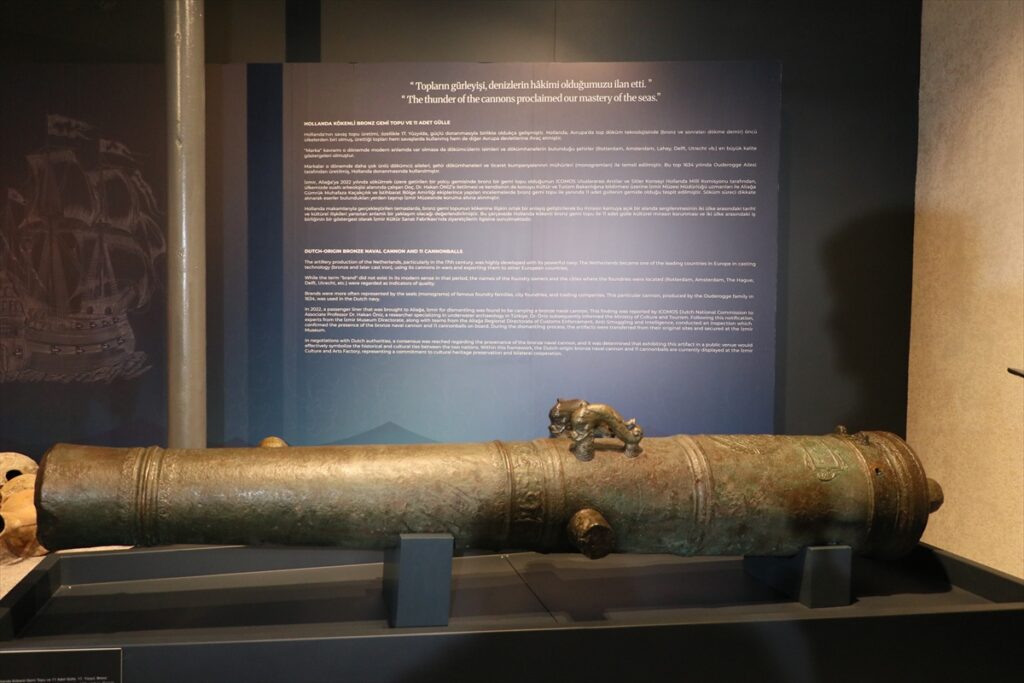
Now on Display in İzmir
The bronze cannon and its accompanying cannonballs are now exhibited at the İzmir Culture and Arts Factory, in a section dedicated to maritime heritage. The display brings together themes of naval engineering, trade networks, and cross-cultural interaction,offering visitors a broader perspective on early modern history.
What began as a routine dismantling process has ultimately revealed a 400-year-old artifact, reminding us that traces of the past can surface in the most unexpected places,even within the steel framework of a modern ship.
- A 1700-year-old statue of Pan unearthed during the excavations at Polyeuktos in İstanbul
- The granary was found in the ancient city of Sebaste, founded by the first Roman emperor Augustus

- Donalar Kale Kapı Rock Tomb or Donalar Rock Tomb

- Theater emerges as works continue in ancient city of Perinthos
- Urartian King Argishti’s bronze shield revealed the name of an unknown country

- The religious center of Lycia, the ancient city of Letoon
- Who were the Luwians?

- A new study brings a fresh perspective on the Anatolian origin of the Indo-European languages

- Perhaps the oldest thermal treatment center in the world, which has been in continuous use for 2000 years -Basilica Therma Roman Bath or King’s Daughter-
- The largest synagogue of the ancient world, located in the ancient city of Sardis, is being restored
Leave a Reply