

15 Newly Identified Churches at Binbir Kilise (Karadağ) Expand Understanding of Byzantine Sacred Landscapes in Central Anatolia
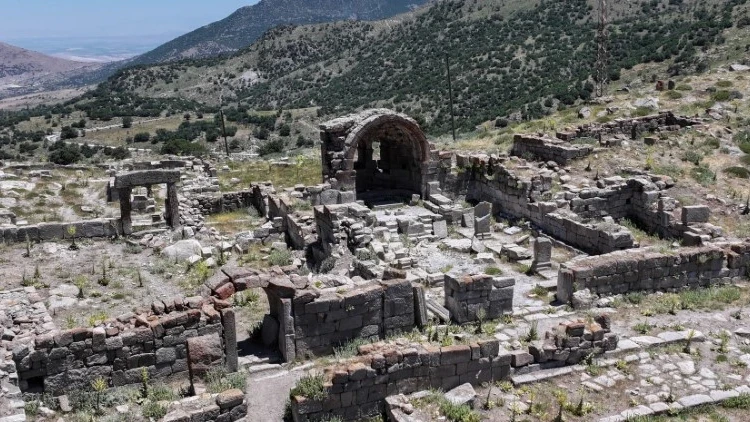
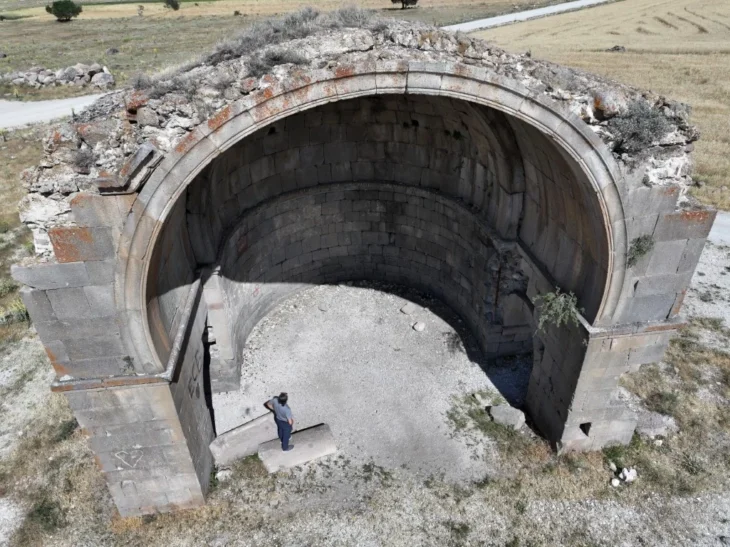
Recent fieldwork in central Anatolia has significantly expanded the archaeological understanding of the Binbir Kilise (Thousand and One Churches) region, located on the slopes of Karadağ, north of Karaman. A survey led by Assoc. Prof. Dr. İlker Mete Mimiroğlu of Necmettin Erbakan University has identified at least 15 previously undocumented churches and chapels, alongside additional settlement features, pointing to a far more complex and extensive occupation than previously recognized.
The project focuses on Early Christian and Byzantine-period architectural remains distributed across the volcanic terrain. Rather than representing a single urban or monastic center, the emerging evidence indicates that Binbir Kilise should be understood as a multi-nodal settlement landscape, composed of interconnected habitation and religious zones.
Distributed Settlement and Infrastructure
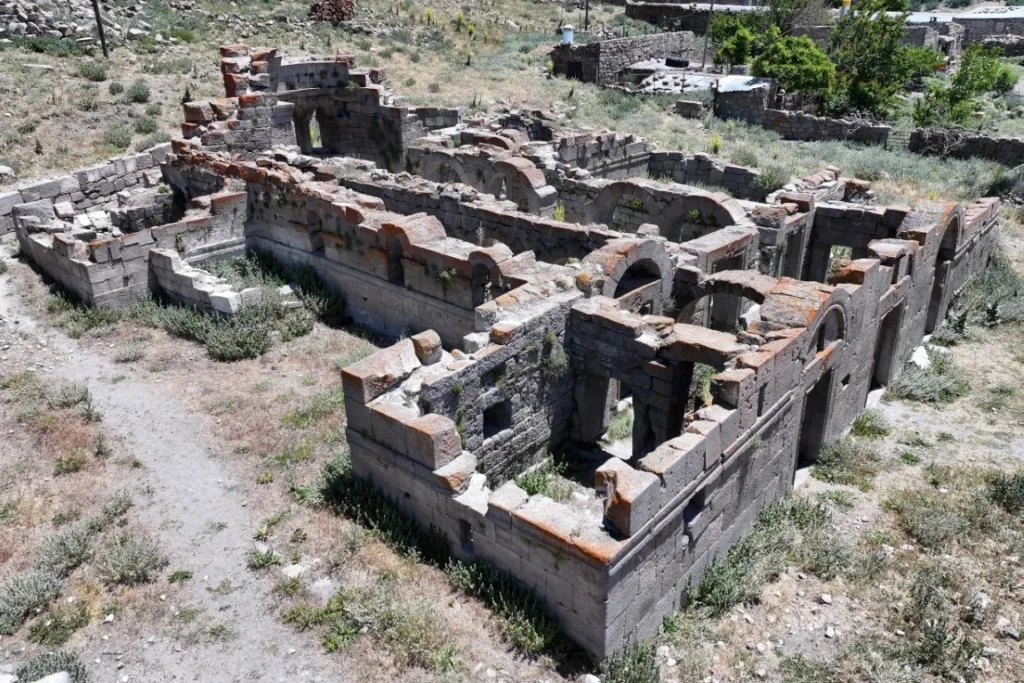
The newly documented structures are not limited to ecclesiastical architecture. The survey has also recorded cistern systems, tombs, inscriptions, open-air cult spaces, and multi-building complexes, all of which suggest the presence of a sustained and organized settlement system.
Such features indicate that the region supported not only religious activities but also a resident population. The presence of water management systems and associated architectural remains points to a level of planning consistent with long-term occupation and regional integration, rather than isolated or temporary use.
📣 Our WhatsApp channel is now LIVE! Stay up-to-date with the latest news and updates, just click here to follow us on WhatsApp and never miss a thing!!
Evidence for Ascetic Practices
A notable component of the survey is the identification of natural and modified cave spaces interpreted as hermitic or ascetic retreat cells. Several of these caves contain carved crosses, reinforcing their interpretation as intentionally adapted religious environments.
This combination of communal religious structures and individual retreat spaces reflects a broader pattern in Byzantine religious life, where monastic communities often coexisted with more solitary forms of devotion.
Reconsidering the Meaning of “Binbir Kilise”
The designation “Binbir Kilise,” commonly translated as “Thousand and One Churches,” has long been understood as a figurative expression rather than a literal count. In Turkish usage, “binbir” conveys abundance and multiplicity.
The density of ecclesiastical remains across the Karadağ slopes has been noted since the late 19th century, when the region was documented by Gertrude Bell and William Mitchell Ramsay. Their observations of numerous churches, monasteries, and chapels laid the foundation for subsequent research, and the latest survey results suggest that a considerable number of structures remained unrecorded until now.
A Regional Religious Center
Taken together, the scale, architectural diversity, and associated infrastructure of Binbir Kilise support the interpretation of the site as a regional religious center, possibly functioning as a pilgrimage destination during the Byzantine period.
While further epigraphic and architectural analysis is required, the presence of multiple ecclesiastical buildings of varying size and complexity suggests a layered religious landscape capable of accommodating different forms of worship and community organization.
Indicators of Continued Occupation
One of the more significant findings of the survey is the discovery of a Seljuk-period coin, indicating that activity in the region may have continued beyond the Byzantine era. This evidence challenges earlier assumptions of abrupt abandonment and instead suggests a more gradual transformation of settlement patterns.
Such continuity is consistent with broader patterns observed in Anatolia, where Byzantine and later medieval phases often overlap in complex ways.
Ongoing Research
Fieldwork at Karadağ remains ongoing, and substantial portions of the landscape are yet to be systematically documented. Future research will focus on refining chronological frameworks, documenting architectural typologies in greater detail, and analyzing inscriptions recovered from the site.
The recent discoveries reinforce the interpretation of Binbir Kilise not as a singular site, but as a large-scale sacred and inhabited landscape, offering valuable insights into the religious, social, and spatial organization of Byzantine Anatolia.
- A 1700-year-old statue of Pan unearthed during the excavations at Polyeuktos in İstanbul
- The granary was found in the ancient city of Sebaste, founded by the first Roman emperor Augustus
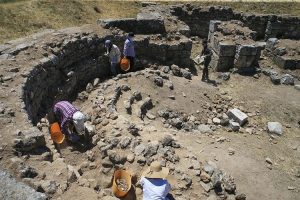
- Donalar Kale Kapı Rock Tomb or Donalar Rock Tomb
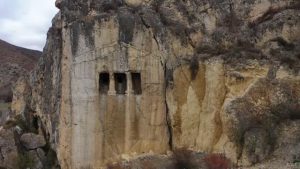
- Theater emerges as works continue in ancient city of Perinthos
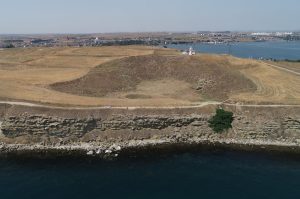
- Urartian King Argishti’s bronze shield revealed the name of an unknown country

- The religious center of Lycia, the ancient city of Letoon
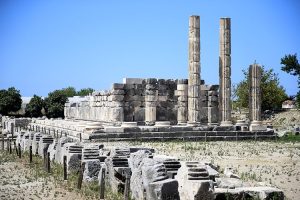
- Who were the Luwians?
- A new study brings a fresh perspective on the Anatolian origin of the Indo-European languages

- Perhaps the oldest thermal treatment center in the world, which has been in continuous use for 2000 years -Basilica Therma Roman Bath or King’s Daughter-
- The largest synagogue of the ancient world, located in the ancient city of Sardis, is being restored
Leave a Reply