
Meryem Ana Mountain in Cappadocia Reveals 93-Room Rock-Cut Complex, Ancient Sacred Site
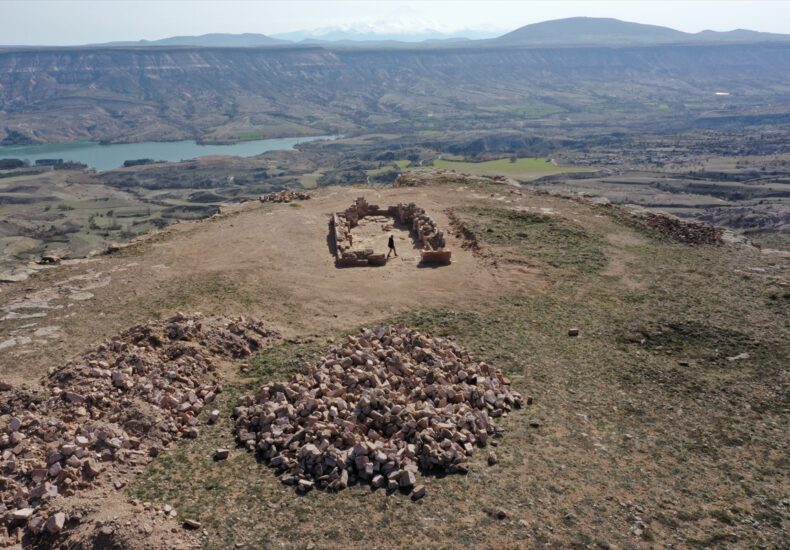
A little-known highland site in central Türkiye is emerging as one of Cappadocia’s most intriguing historical landscapes. Recent work at Meryem Ana Mountain, a 1,603-meter peak near Ürgüp, has brought to light a large rock-cut complex and clear evidence of long-term religious use, reshaping understanding of the area’s cultural depth.
Located between the villages of Ayvalı and Cemil, near the Damsa Dam, the site—known locally as Golgoli—has long been part of regional memory. Now, systematic clearing and documentation have revealed a far more complex picture, pointing to a multi-period sacred center rather than an isolated settlement.
93-room complex points to organized activity
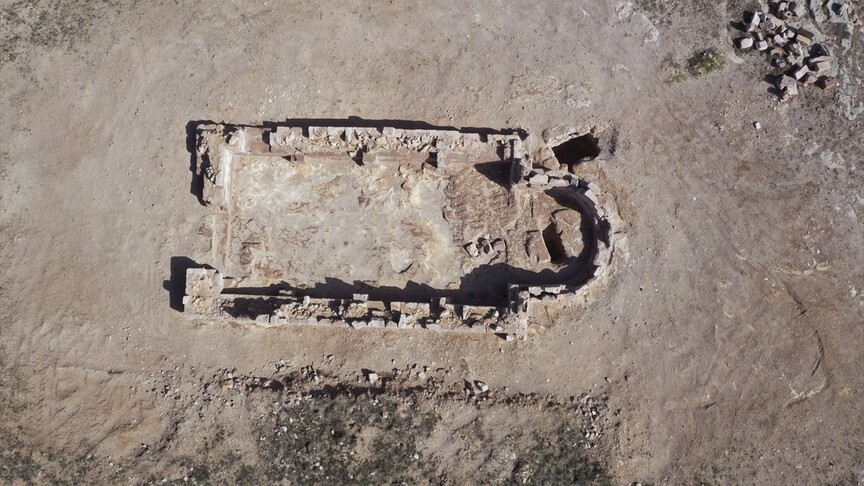
At the summit, researchers have identified a substantial rock-cut formation consisting of approximately 93 interconnected chambers, along with a central structure interpreted as a place of worship. The scale and organization of the complex suggest coordinated construction and sustained use, indicating that the mountain functioned as more than a simple refuge or monastic retreat.
Archaeological observations also point to a settlement of roughly 200 households on the lower slopes. Together, these features indicate a structured community closely tied to the religious significance of the summit.
📣 Our WhatsApp channel is now LIVE! Stay up-to-date with the latest news and updates, just click here to follow us on WhatsApp and never miss a thing!!
Evidence of a sacred site across centuries
Interpretations of the summit structure suggest that the site may have originated as a sanctuary dedicated to Mithras during the Persian period. The cult of Mithras, associated with solar symbolism and cosmic order, was widely practiced across parts of Anatolia.
In later centuries, particularly during the Roman period, the same space appears to have been repurposed as a Christian church. This continuity reflects a well-documented pattern in Anatolia, where sacred spaces were adapted to new belief systems rather than abandoned, preserving their spiritual importance across generations.
Landscape alignment strengthens interpretation
The mountain’s geographical position adds weight to its interpretation as a sacred site. From the summit, the sun rises behind Mount Erciyes and sets beyond Mount Hasan, creating a clear visual axis across the central Anatolian plateau.
Such alignment may have held symbolic or ritual significance, suggesting that the location was deliberately selected for its relationship with the horizon and solar movement.
A site remembered in recent history
Historical accounts extending into the late Ottoman period indicate that Meryem Ana Mountain remained in active use well into modern times. Records describe annual gatherings on September 8, associated with the Nativity of the Virgin Mary, when local communities would ascend the mountain and stay in its rock-cut spaces for several days.
There are also references to newly married couples visiting the site, reflecting its role not only as a religious destination but also as a place embedded in social and cultural traditions.
A new direction for Cappadocia tourism
The site is now being integrated into the Cappadocia Culture Route, an approximately 80-kilometer network linking archaeological sites, historic villages, and religious landmarks across the region.
Officials expect that the inclusion of Meryem Ana Mountain will help diversify Cappadocia’s tourism model. While the region is globally known for hot air ballooning, initiatives like this aim to expand its profile toward cultural and faith-based tourism, encouraging longer stays and deeper engagement with its heritage.
An overlooked site gaining recognition
Despite its rich archaeological and historical potential, Meryem Ana Mountain has remained largely outside mainstream tourism routes. That is beginning to change.
With its extensive rock-cut architecture, layered religious history, and commanding natural setting, the site offers a rare opportunity to explore how sacred landscapes in Anatolia evolved over time.
As conservation and research continue, Meryem Ana Mountain is likely to become a key reference point in understanding Cappadocia’s lesser-known past.
- A 1700-year-old statue of Pan unearthed during the excavations at Polyeuktos in İstanbul
- The granary was found in the ancient city of Sebaste, founded by the first Roman emperor Augustus
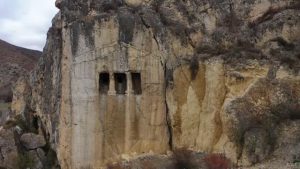
- Donalar Kale Kapı Rock Tomb or Donalar Rock Tomb
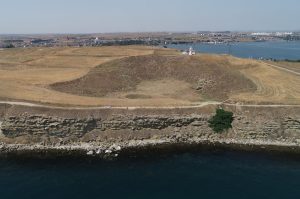
- Theater emerges as works continue in ancient city of Perinthos
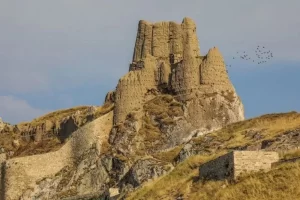
- Urartian King Argishti’s bronze shield revealed the name of an unknown country
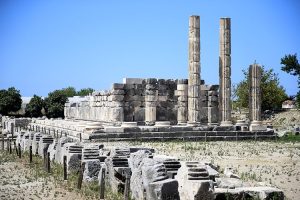
- The religious center of Lycia, the ancient city of Letoon
- Who were the Luwians?
- A new study brings a fresh perspective on the Anatolian origin of the Indo-European languages
- Perhaps the oldest thermal treatment center in the world, which has been in continuous use for 2000 years -Basilica Therma Roman Bath or King’s Daughter-
- The largest synagogue of the ancient world, located in the ancient city of Sardis, is being restored
Leave a Reply