Saturday, December 13 2025
Monumental Hellenistic Goddess Head Unearthed in Metropolis: Early Analysis Suggests a Link to Hestia

Aegean . Anatolian News

Monumental Hellenistic Goddess Head Unearthed in Metropolis: Early Analysis Suggests a Link to Hestia

Written by

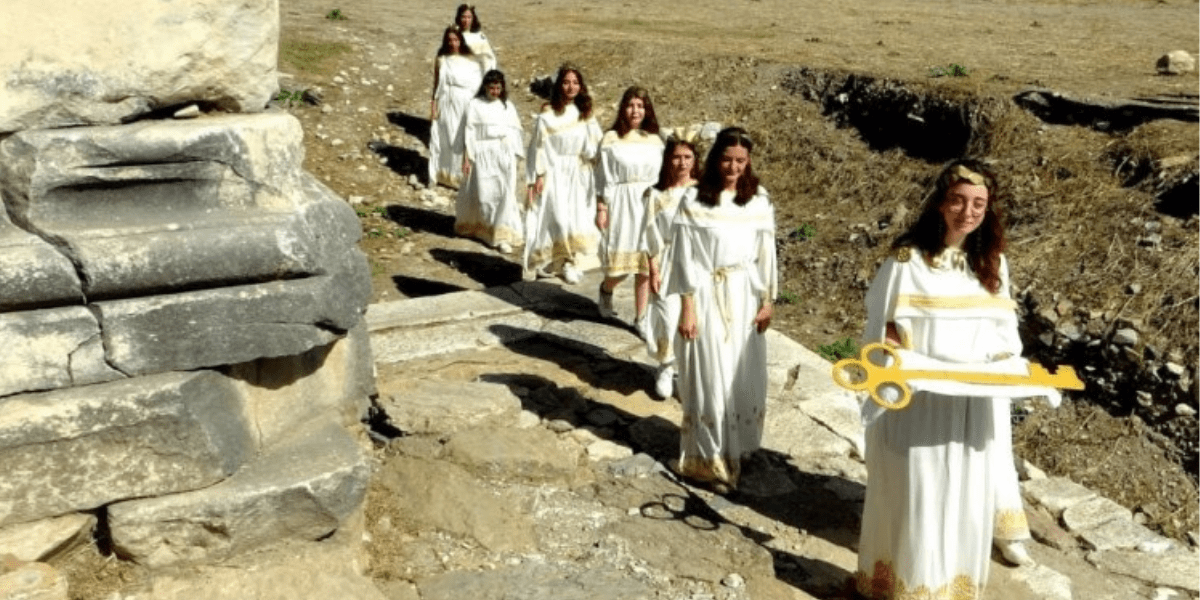
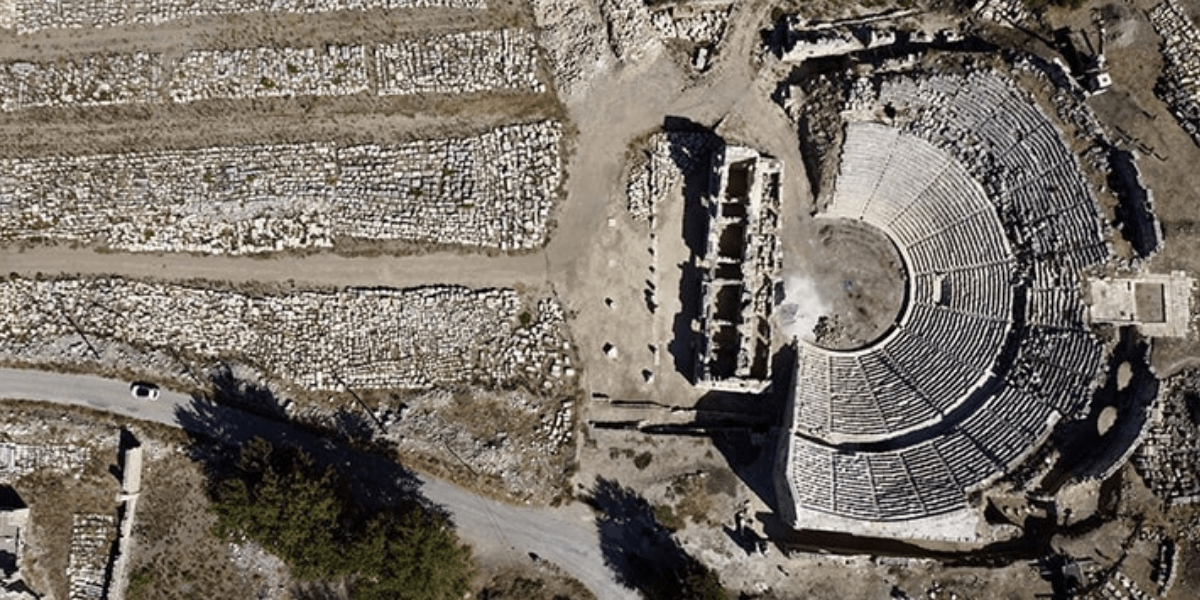
The ancient city of Metropolis, set among the orchards and gentle hills of Izmir’s Torbalı district, has delivered one of its most impressive finds in recent years. Archaeologists working in a structure identified as a commercial building have uncovered the finely carved head of a monumental marble statue—a discovery that may redefine what is known

Gobekli Tepe

Did aliens build Göbekli Tepe? The head of the excavation answers

Göbekli Tepe is the most exciting archaeological discovery that has profoundly influenced human history. Klaus Schmidt, who discovered Göbekli Tepe dating back to 12,000 BC and headed excavations until 2014, described it as a shelter used by nomadic hunter-gatherer groups over a large area, with few or no permanent residents. In recent days, especially on

2,700-year-old Military Roman Port Found in Parion, Türkiye

Underwater work at Parion reveals 2,700-year-old Roman military harbor

Underwater work in the ancient city of Parion in the Biga district of Çanakkale in northwestern Türkiye has uncovered a 2,700-year-old military harbor dating back to the Roman Empire. The military harbor is the second harbor found in the ancient city. Excavations in the ancient city of Parion, which was an important trade center of

4000-year-old fabric dyed with insect dye discovered in a cave in the Judean Desert

4000-year-old fabric dyed with insect dye discovered in a cave in the Judean Desert

Researchers have discovered fabric dyed with kermes (Kermes vermilio) in the Cave of the Skulls, which bears traces of the Middle Bronze Age. The piece of red fabric found in the Cave of the Skulls in the Judean Desert was made of linen and wool. Radiocarbon dating dated the fabric to the Middle Bronze Age,

Sumela Monastery

The frescoes of the Mother Rock Church in Sumela Monastery are being restored

The damaged frescoes of the Mother Rock Church in Sumela Monastery, which is on the UNESCO World Heritage Tentative List, are being restored in accordance with the original. The Sumela Monastery, carved into a steep cliff and therefore also known as the “Eagle’s Nest”, is located in Trabzon’s Maçka district, within the boundaries of the

Archaeologists may have found the temple of Šawuška, sister of the air god Teshup, in the Šamuha

Archaeologists may have found the temple of Šauška, sister of the air god Teshup, in the Samuha

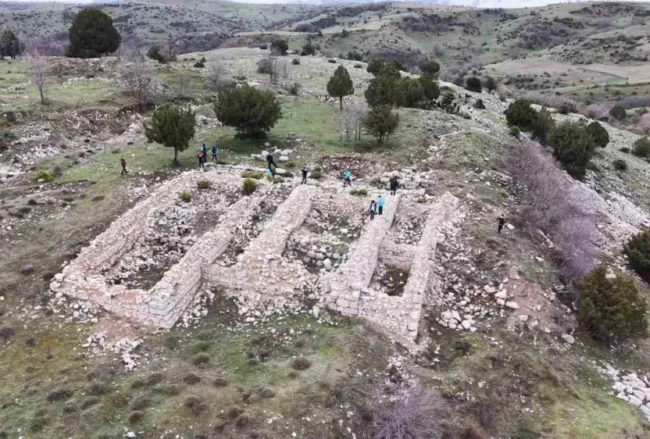
In Samuha, an important religious city for the Hittites, a structure thought to be the temple of Šauška, the sister of the weather god Teshup, was unearthed. Samuha is a Hittite city of religious significance that flourished between 1800-1600 BC. Samuha, now known as Kayalıpınar, is located in central Türkiye, about 40 kilometers west of

Archaeologists discover Etruscan house structure in Corsica

Archaeologists discover first Etruscan house structure in Corsica

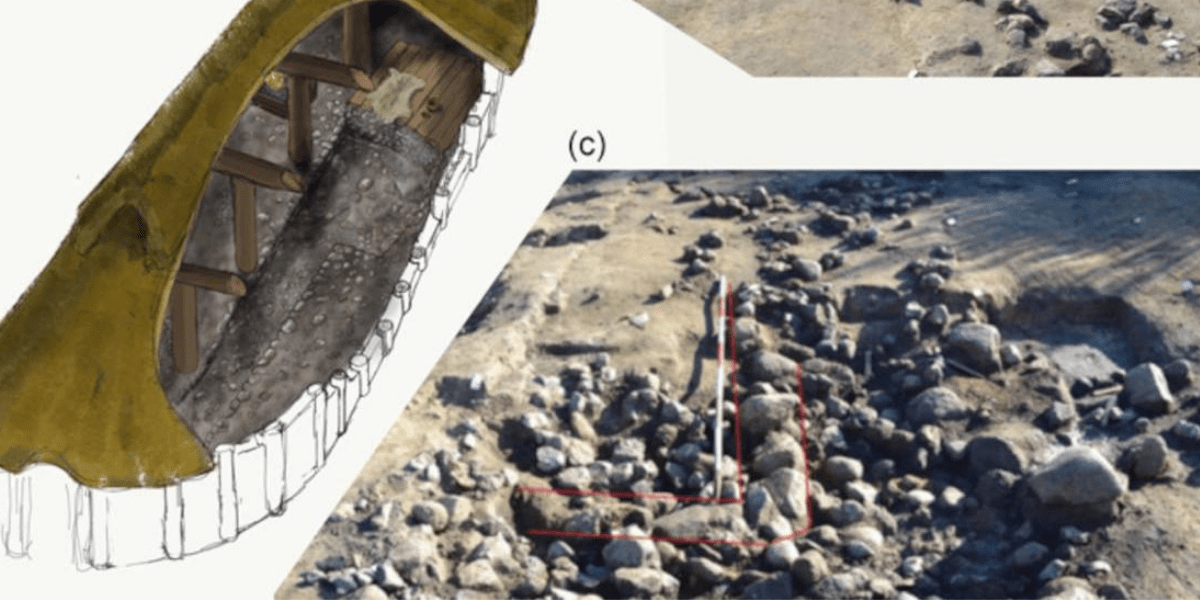
Archaeologists have discovered on the east coast of Corsica the first Etruscan house structure dating from the 6th to 4th centuries BC. Archaeologists from Inrap, the French National Institute for Preventive Archaeological Research, uncovered the Etruscan house structure as part of a project to build a detached house in the municipality of Ghisonaccia. Until today,

Satala

New season excavations in the ancient city of Satala begin

New season excavations begin in the ancient city of Satala, which dates back to the Bronze Age. Satala Ancient City is located in the Kelkit district of Gumushane in the Eastern Black Sea Region of Türkiye. Satala, which gathered Antioch, Cappadocia and Trabzon at a crossroads, was an important fortress in the defense of Rome,

Using 3,500-year-old tablets, bread from the Hittite, Sumerian and Roman periods was baked

Using 3,500-year-old tablets, bread from the Hittite, Sumerian and Roman periods was baked

Bread is an indispensable food source in every period of history. In Anatolia, home to the transition to settled life, bread is considered both a foodstuff and a sacred food offered to the gods. The Hittites are a Bronze Age civilization that stands out with its bread making and diversity. Hundreds of tablets unearthed in

Croatian underwater archaeologists discover rare 400-year-old bronze trumpets in a shipwreck

Croatian underwater archaeologists discover rare 400-year-old bronze trumpets in a shipwreck

Croatian underwater archaeologists have discovered rare bronze trumpets, unique on a global scale, on a sunken 16th-century ship near Cape Kamenjak off the southern coast of Istria. The bronze trumpets were found in the cargo of a sixteenth-century Dutch shipwreck in Leiden, the Netherlands. Dr. Luka Bekić of the International Centre for Underwater Archaeology in

3500-year-old resting place used by nomadic peoples discovered in Azerbaijan

3500-year-old resting place used by nomadic peoples discovered in Azerbaijan

Azeri and Italian archaeologists have discovered a 3500-year-old rest stop used by nomadic peoples in Azerbaijan. Working in the area known as Tava Tepe, near the border between Armenia, Georgia and Azerbaijan, the team found the remains of a rest stop. According to the archaeologists, the monumental structure was used by nomadic communities moving between

1 67 68 69 70 71 108