
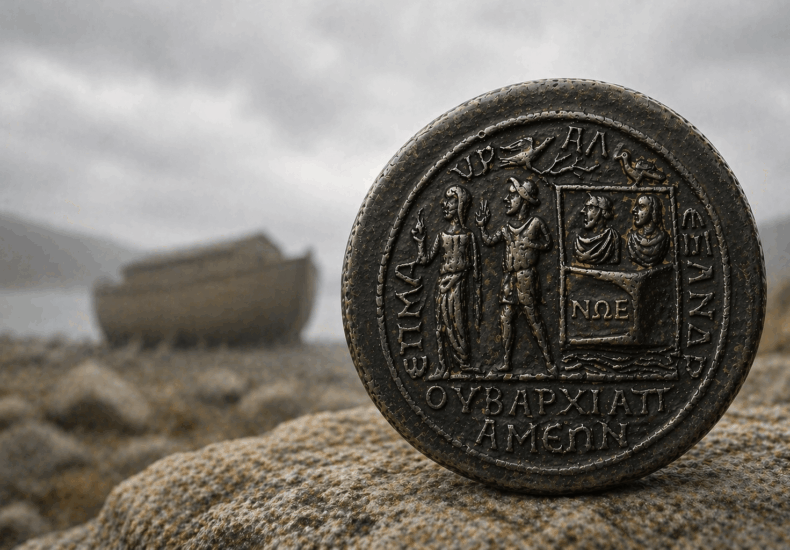
2,000-Year-Old Roman Coin from Apameia Reveals One of the Earliest Depictions of Noah’s Ark
A remarkable Roman coin minted in ancient Apameia Kibotos—today’s Dinar—is drawing renewed attention for carrying what may be the earliest known biblical scene ever struck on currency. Dating between AD 192 and 253, the coin offers a rare fusion of Roman imperial authority and early Judeo-Christian imagery.
A Biblical Scene Struck in Metal
The reverse of the coin presents a detailed and highly symbolic depiction of Noah and his wife during the Flood narrative described in Book of Genesis.
At the center stands a box-shaped ark, rendered amid rising waters. Inside, Noah and his wife are shown enclosed within the vessel. Most strikingly, the Greek inscription ΝΩΕ (Nōe)—the Hellenized form of Noah’s name—is clearly engraved on the ark itself, leaving little ambiguity about the scene’s identity.
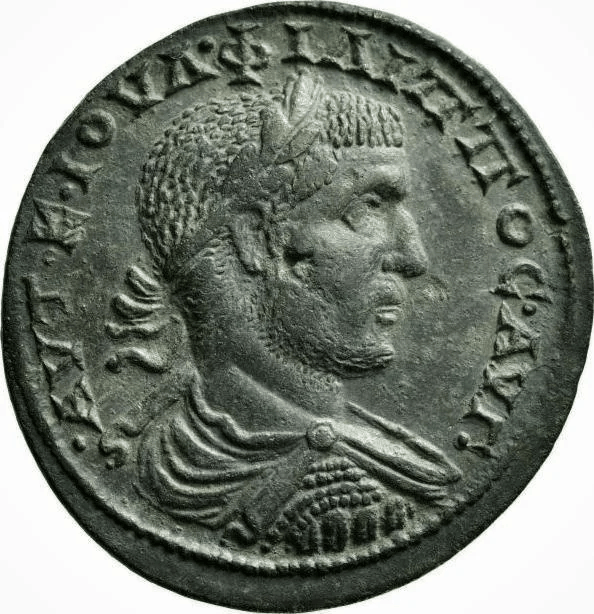
Surrounding details deepen the narrative:
A raven appears perched atop the ark, while a dove carrying an olive branch is depicted above—both referencing key moments from the Flood story. These elements align closely with the biblical account in Genesis 8, where the birds are sent to test whether the waters have receded.
📣 Our WhatsApp channel is now LIVE! Stay up-to-date with the latest news and updates, just click here to follow us on WhatsApp and never miss a thing!!
From Survival to Salvation
The composition extends beyond the ark. On the left side of the coin, Noah and his wife are shown again, this time outside the vessel, standing on firm ground with raised hands in a gesture of gratitude.
This dual-scene design visually compresses the narrative arc of the Flood: from divine trial to deliverance. It reflects the moment described in Genesis 8:1, when God “remembers” Noah and brings the Flood to an end, allowing humanity’s renewal to begin.
Imperial Power Meets Sacred Story
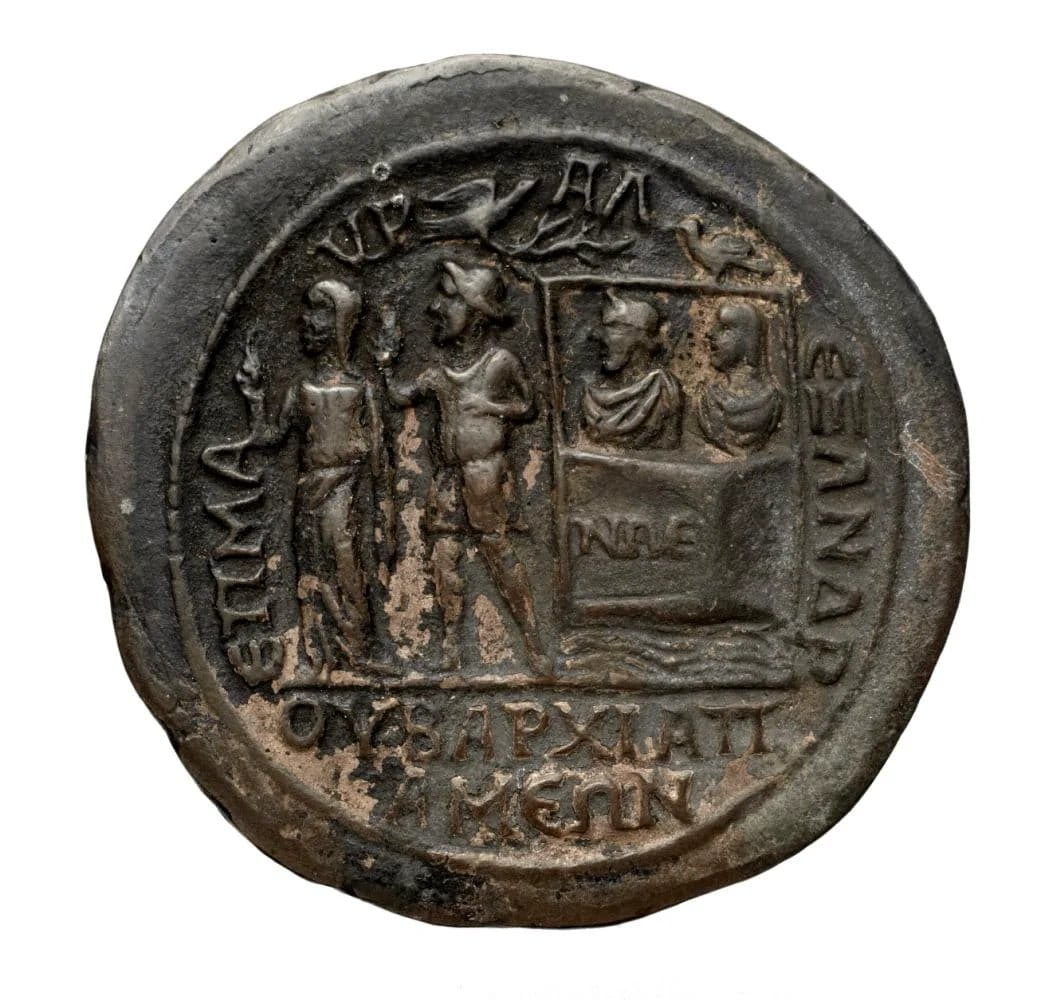
The obverse of the medallion features the portrait and titles of Philip the Arab, under whose reign these medallions were issued.
This juxtaposition is significant. It suggests that local religious traditions and narratives—possibly influenced by Jewish communities in the region—were not only tolerated but integrated into the visual language of Roman provincial coinage.
Apameia itself held symbolic importance. Its epithet Kibotos—meaning “chest” or “ark”—may have contributed to the city’s association with the Flood story, making it a fitting place for such imagery to emerge.
Why This Coin Still Matters
This coin is more than a numismatic curiosity. It stands at the crossroads of religion, politics, and visual storytelling in the ancient world. By embedding a biblical narrative into everyday currency, it reflects how sacred stories circulated not just through texts, but through objects handled daily by ordinary people.
In doing so, Apameia’s coinage may represent one of the earliest attempts to visually codify a biblical episode in material culture—centuries before such themes became widespread in late antique and Byzantine art.
- A 1700-year-old statue of Pan unearthed during the excavations at Polyeuktos in İstanbul
- The granary was found in the ancient city of Sebaste, founded by the first Roman emperor Augustus
- Donalar Kale Kapı Rock Tomb or Donalar Rock Tomb
- Theater emerges as works continue in ancient city of Perinthos

- Urartian King Argishti’s bronze shield revealed the name of an unknown country

- The religious center of Lycia, the ancient city of Letoon
- Who were the Luwians?
- A new study brings a fresh perspective on the Anatolian origin of the Indo-European languages

- Perhaps the oldest thermal treatment center in the world, which has been in continuous use for 2000 years -Basilica Therma Roman Bath or King’s Daughter-
- The largest synagogue of the ancient world, located in the ancient city of Sardis, is being restored
Leave a Reply